
A warm welcome to the historically famous Ahmednagar!
Ahmednagar city, which has a history of four centuries, established its dominance in the medieval period as the capital of the Nizamshahi. The name of Ranramini Chandbibi, who stopped the Mughal invasion, was even used in the Trikhand region. Ahmednagar city also set many standards in the fields of social, educational and artistic fields. Some of the buildings that preserve this history are still standing, surviving the ravages of time. This is their fleeting identity…
Bhuikot Fort of Ahmednagar
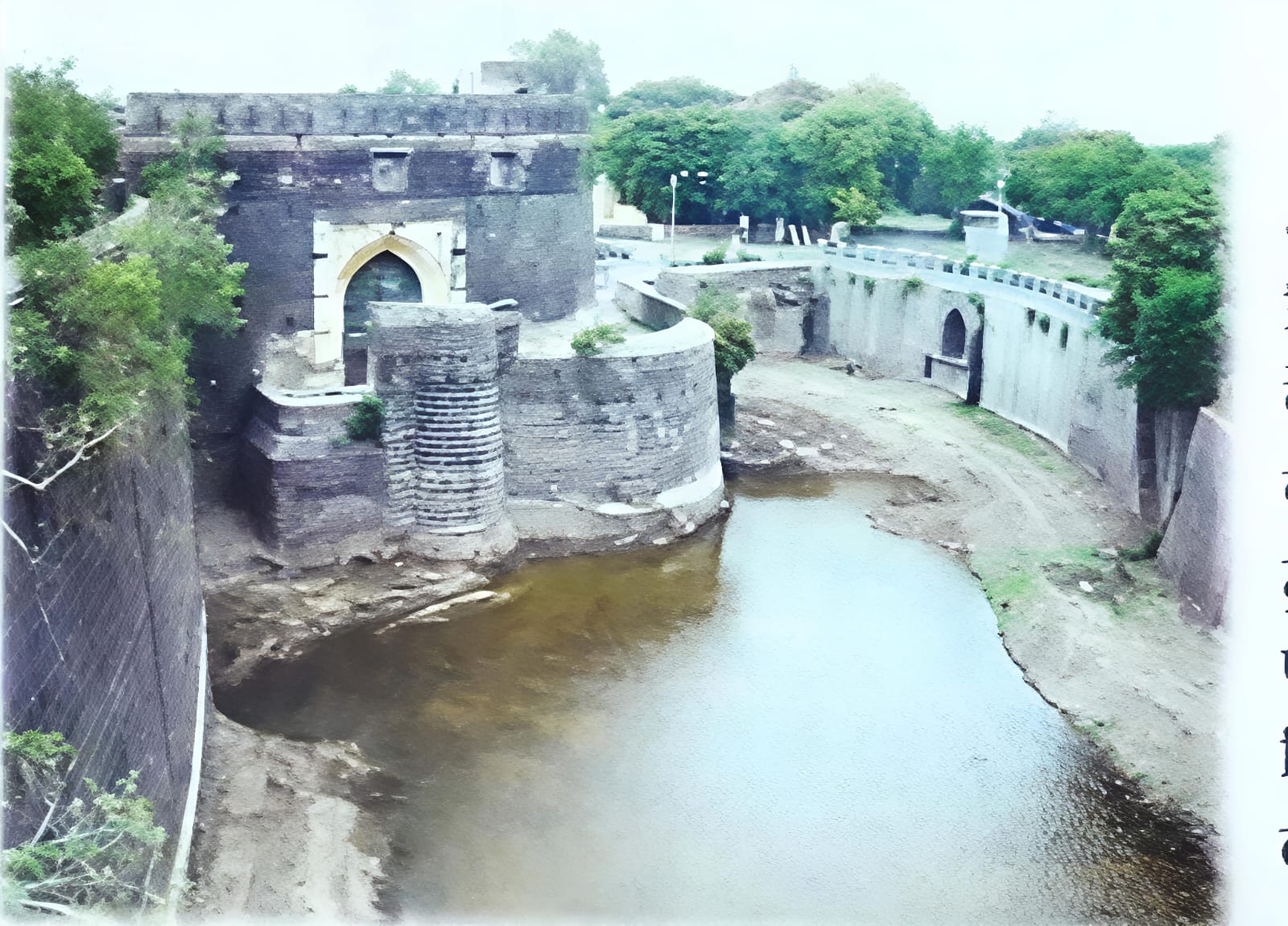
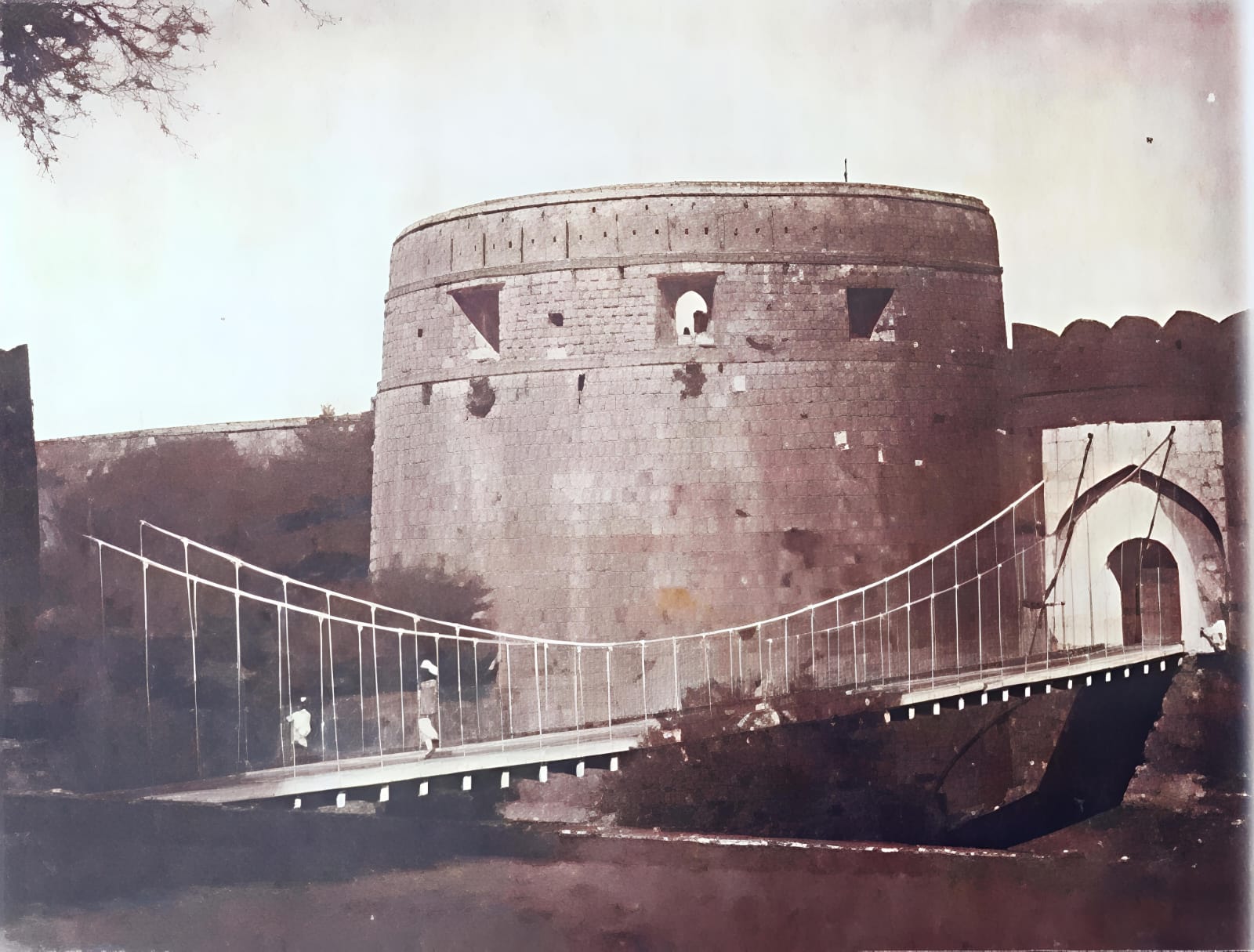
The city's Bhuikot Fort is a witness to the five hundred years of history of the city. The place where he defeated the Bidar general Jahangir Khan was chosen by Ahmed Badshah, the founder of the Nizamshahi, for his capital. Before establishing the actual city, he built a palace called 'Kot Bam Nizam' on this site in 1490. Initially, the fort's walls were made of mud. Hussain Nizamshah built the present-day walls with the help of the Portuguese around 1562. The fort, which has a circumference of 1 mile and 80 yards, has 22 bastions. The main entrance is in a large bastion. There is a wide moat around the walls.
In 1832, a suspension bridge was built on the eastern side of the fort. The fort had buildings such as Son Mahal, Maman Mahal, Mulk Abad, Meena Mahal, Roop Mahal, Baghdad Mahal, Dilkshad, Madrasa, Pauskhana etc. and wells like Ganga, Jamuna, Machilibai, Shakkarbai. Chandbibi protected this fort during the Mughal invasions in 1505-96 and 1600. After her death, the fort fell into the hands of the Mughals. During the reign of the Peshwas, Tulaji Ankhe, Moroba Dada, Nana Fadnavis, Sadashiv Rao Bhau, the Peshwa's impersonator, were kept as captives in this fort. Sambhaji Raja's wife Yesubai, as well as the fourth Shivaji Maharaj of Kolhapur were also imprisoned in this fort for some time.
(Distance from bus stand 2.5 km.)
National Leaders' Chamber
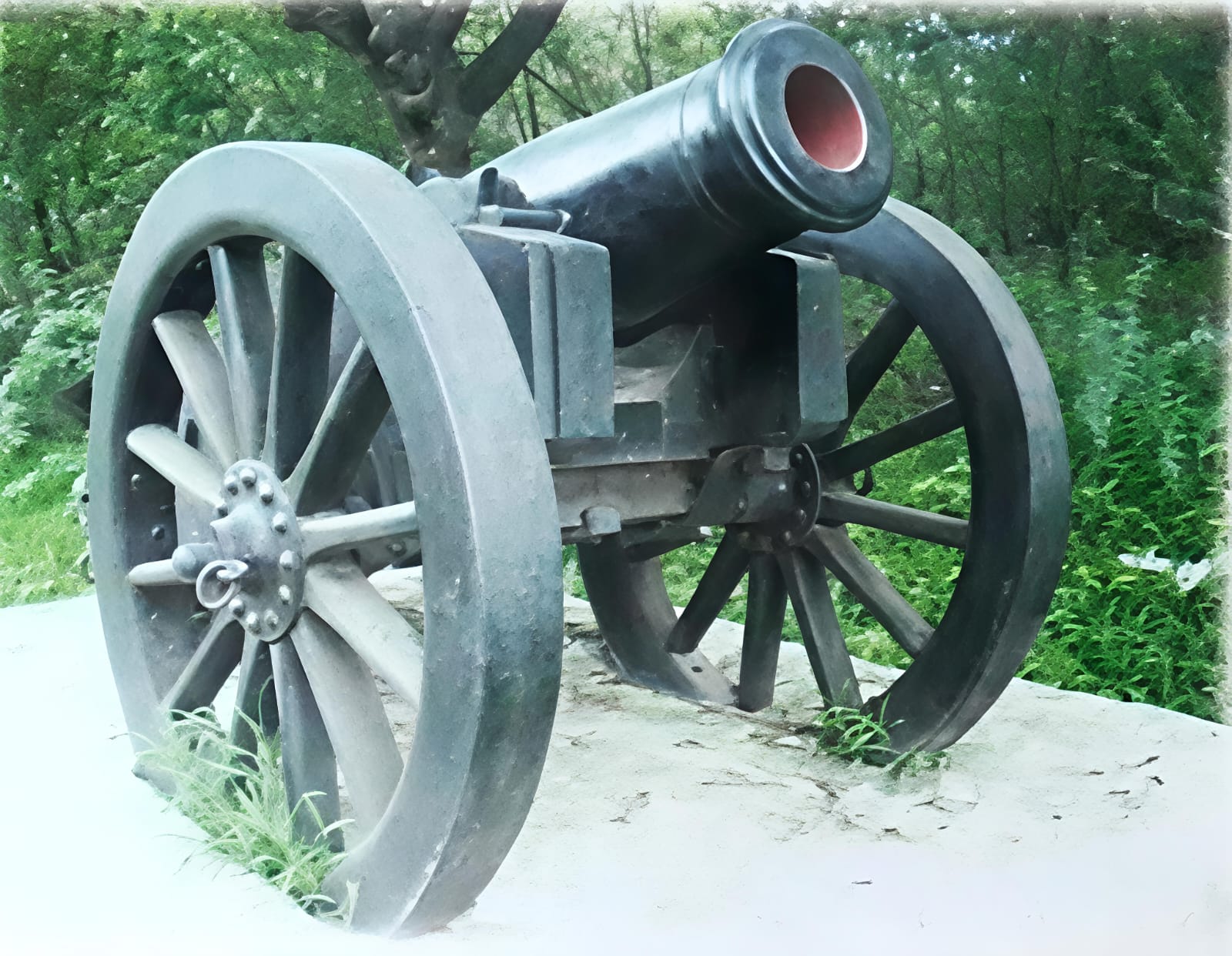
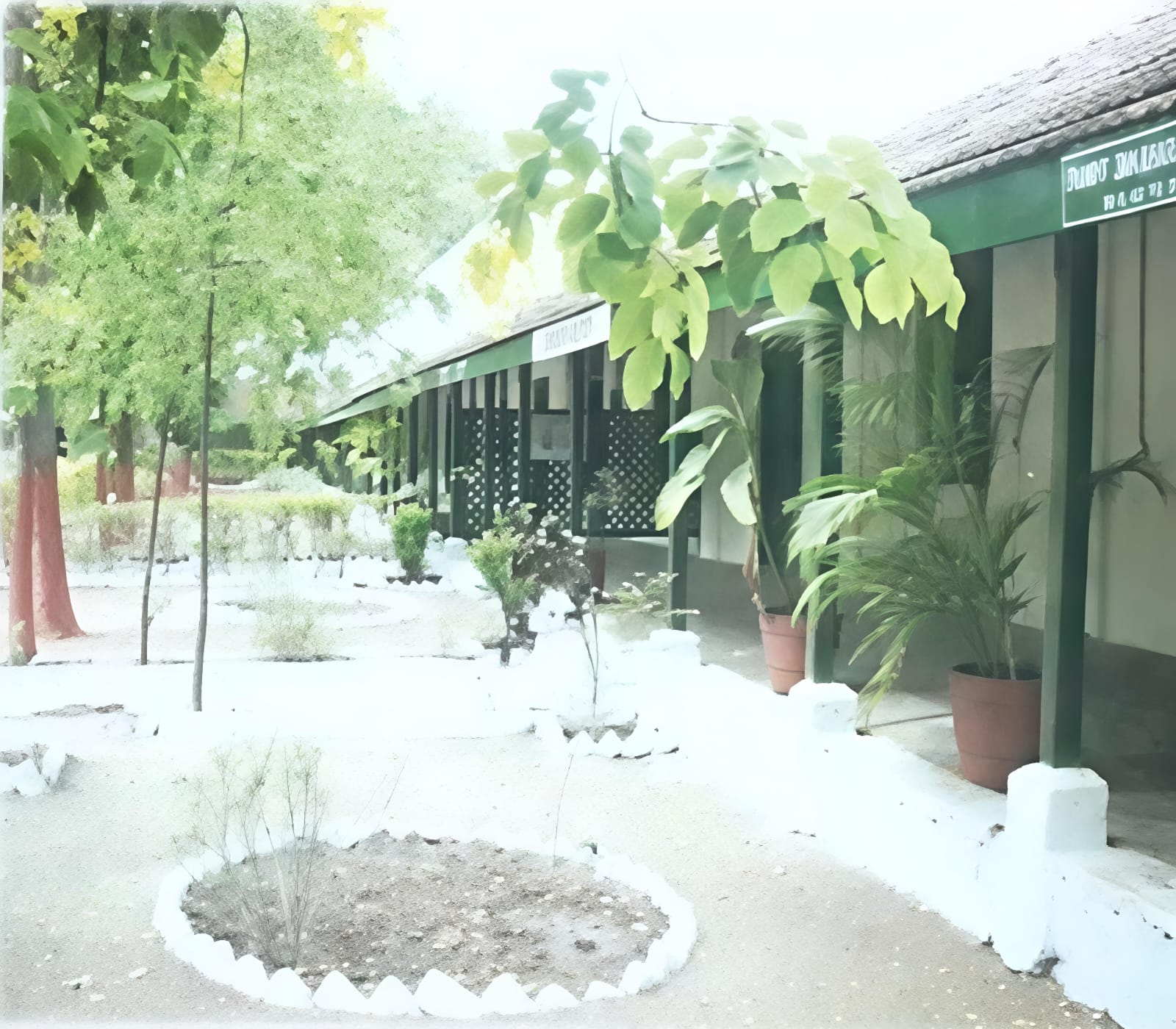
During the ‘Chale Jaav’ movement, twelve national leaders like Pandit Nehru, Vallabhbhai Patel, Maulana Azad, Narendra Dev etc. were kept in captivity in the city fort. Panditji wrote the world famous book ‘The Discovery of India’ here. The room where these leaders were kept has been preserved. The items used by Pandit Nehru and copies of his manuscripts can be seen there. The fort is currently under military control. The place where the English commander Wellesley had breakfast after conquering the fort in 1803 is near the moat. A cannon has been placed there as a reminder of this incident.
Bagroja
Ahmed Nizam Shah, the founder of Ahmednagar city, is resting in this structure standing on the banks of the Sina River. There is a wall around this dome-shaped building. Earlier, there was a garden in this area. The dome of this structure, which houses the tombs of the emperor and his wife, has beautiful carvings on the inside and outside walls, and verses from the Quran have been engraved on it. There is a window in the middle of the dome, and the rays of the sun fall on the tomb from the middle. In the courtyard, there is the tomb of the scholar Wazir Shah Tahirvi, who was the successor of Yunhan Nizam Shah. Near Bagroja, there is a memorial of the Battle of Talikot. There is a footpath along the side of Satalkar Hospital to reach this structure.
(Distance from bus stand 2.5 km)
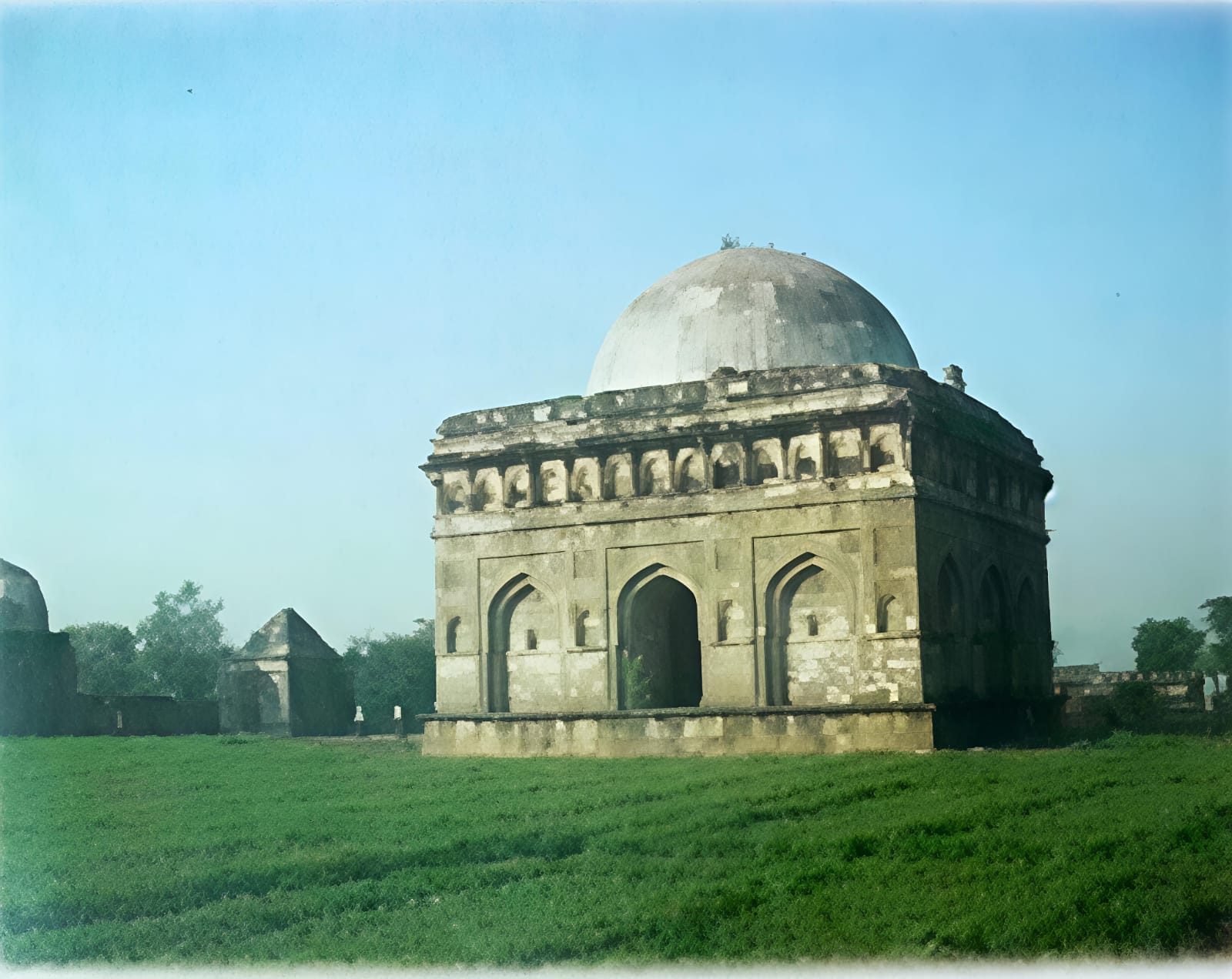
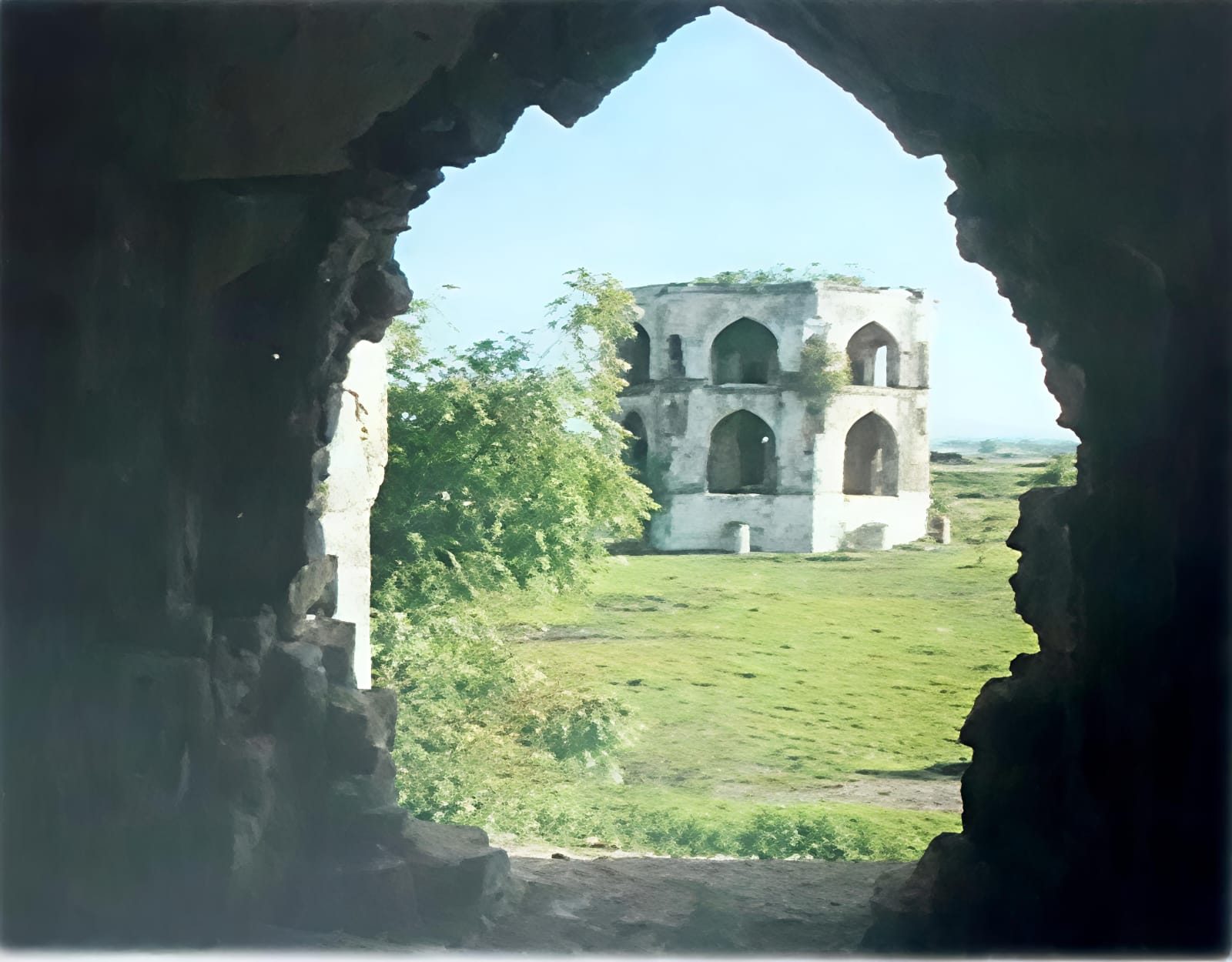
Hasht-Behasht Bagh
This octagonal two-storeyed building, known as 'Faizbaksh Mahal', located in the middle of the lake, was built in 1506 during the reign of Ahmed Nizam Shah. It is said that the eight doors of this building are the eight doors of Swagachi. There is a Hagamardana near this building. Water was brought here by a pipe from Pimpalgaon and Shendi. The air and lighting system in the hamamkhana are worth seeing. Earlier, there was a beautiful rose garden in this area. Akbar's son Musad stayed here when he came for a visit. Murtuza Diwana lived in the wooden palace in this area. Some distance away is Badgir (Air Palace). There is a road to reach here from the Nagar-Manmad road as well as the Pipeline Road.
(Distance from Tarakpur bus stand 4 km)
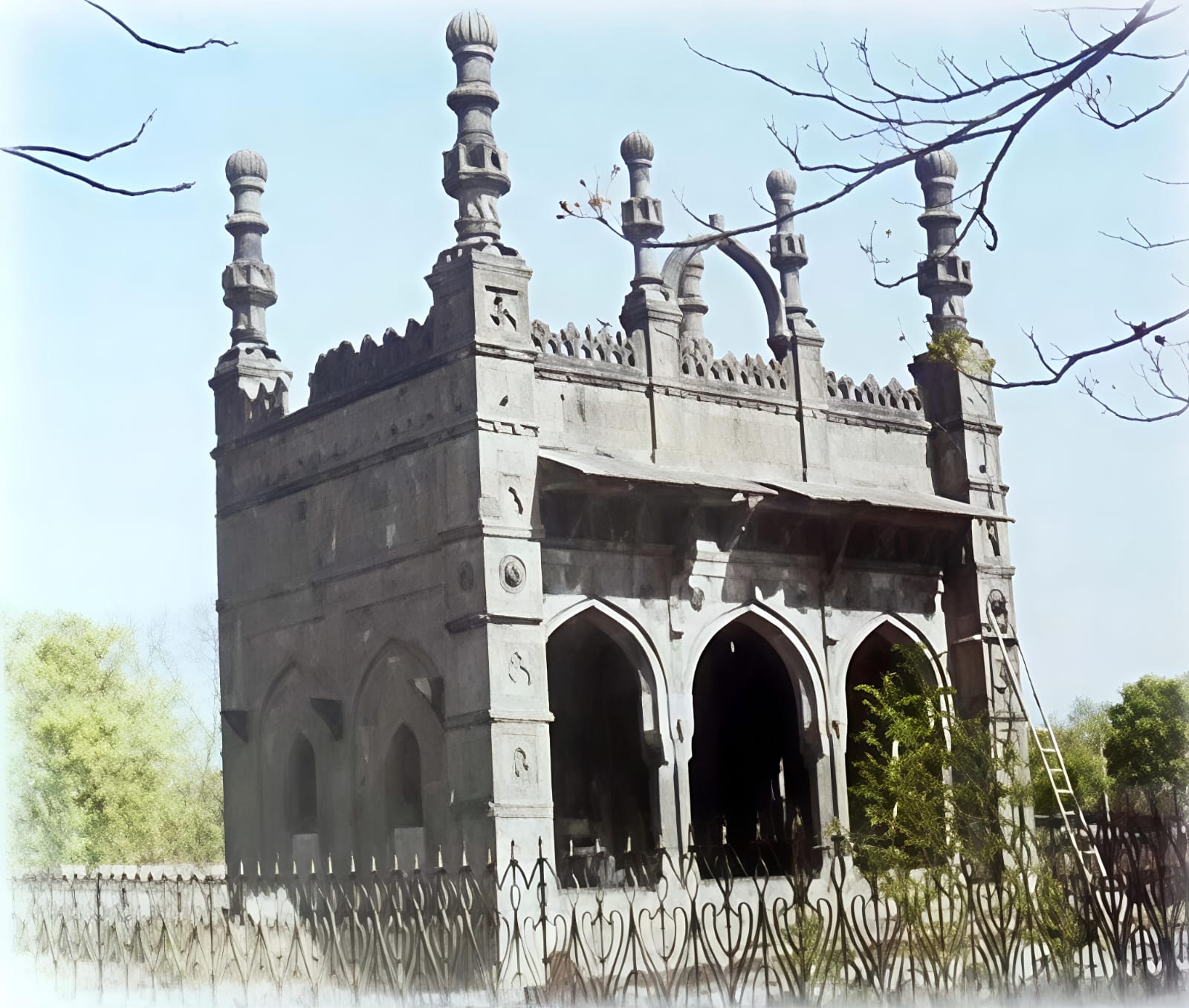
Damdi Masjid
1 km from Bhuikot Fort. There is a ‘Damdi Mosque’ with wonderful calligraphy on Bunhannagar Road. This mosque was built in 1567 by Sardar Sher Khan, who was under the Nizam Shah. It is also said that a fakir built this mosque by saving the damdi-damdi (the then currency) given by the laborers while the fort was being built. The mosque is small in size, with three arches; but the carvings on it are wonderful. There are full-blown lotus flowers on the minarets and elsewhere, and inside the mosque, verses from the Quran have been carved in a marble stone in a niche in the front wall. The design of the floor tiles and the stones on the roof are exactly the same.
(Distance from bus stand 3.9 km)
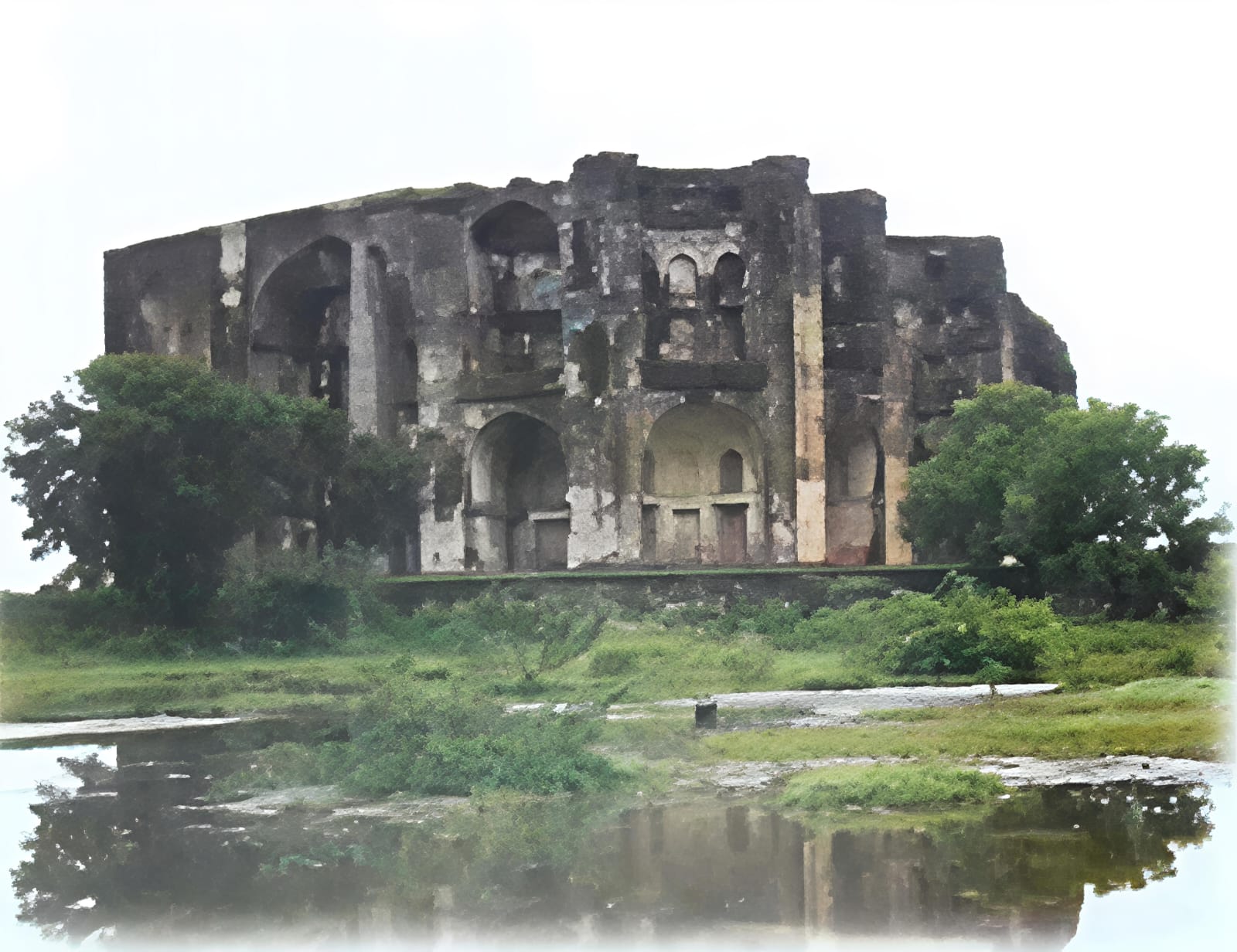
Farahbakhsh Mahal
The ‘Farah Bakhsh Mahal’ on the Jagar-Solapur road, which preserves the memories of the glorious days of the Nizamshahi, is a building famous for its extraordinary beauty and good air. This gilded palace was built by Nizamshah’s successor, Changez Khan, and after him, Salabat Khan and Vyamtaswan Dakhni. This structure was completed in 1578 during the reign of Murtuza Nizamshah. This octagonal two-storey palace, located in the middle of a large square lake, used to have a beautiful garden around it. There is a grand Rang Mahal in the middle of the palace. On the second floor, the women of the royal family were provided with seating behind a chic curtain. The grand arches and Karanji are the special features of this palace! Peshwa Sadashiv Rao, Akbar’s son Murad lived in this palace for some time.
(Distance from bus stand 4 km)
Salabatkhan Makbara
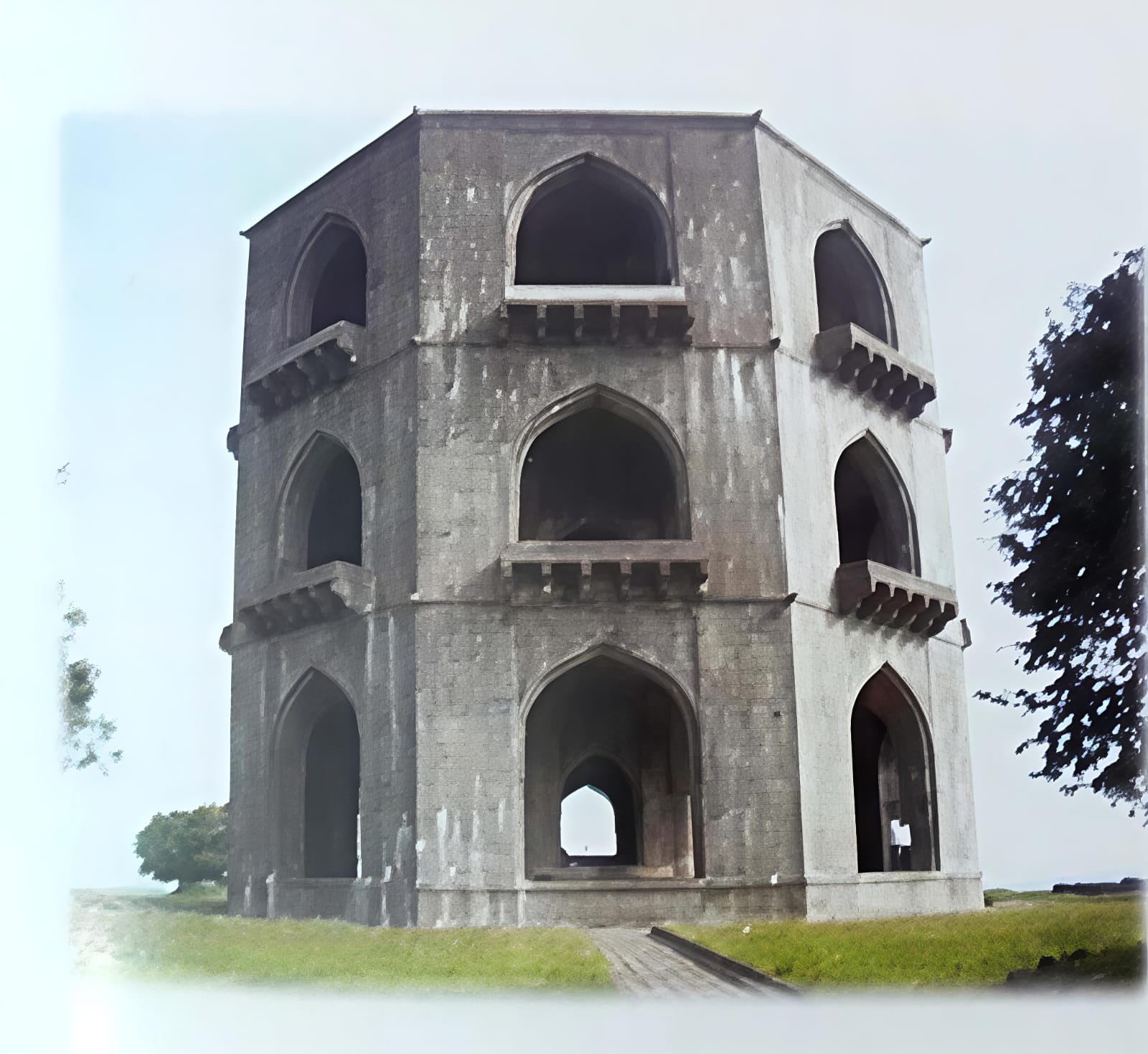
This structure, standing on a distant hill, comes into view as you enter the city. Known as ‘Chandbibicha Mahal’, this structure on the Nagar-Pathardi road is actually the tomb of Murnuja Nizamjahwa minister Salabat Khan (II). This three-storey octagonal Damdi structure has been built on the plateau of Shah Mountain, at an altitude of 3080 feet above sea level. Salabatswan died in 1589. He built this structure in 1580 during his lifetime. In the basement is the tomb of Salabat Khan and his wife, while in the premises of the structure is the tomb of his second wife and dog. There are three lakes on the mountain slope. There is a Virbhadra temple at the foot. This palace is also mentioned as ‘Durbin Mahal’…
(Distance from bus stand 12 km)
Alamgir
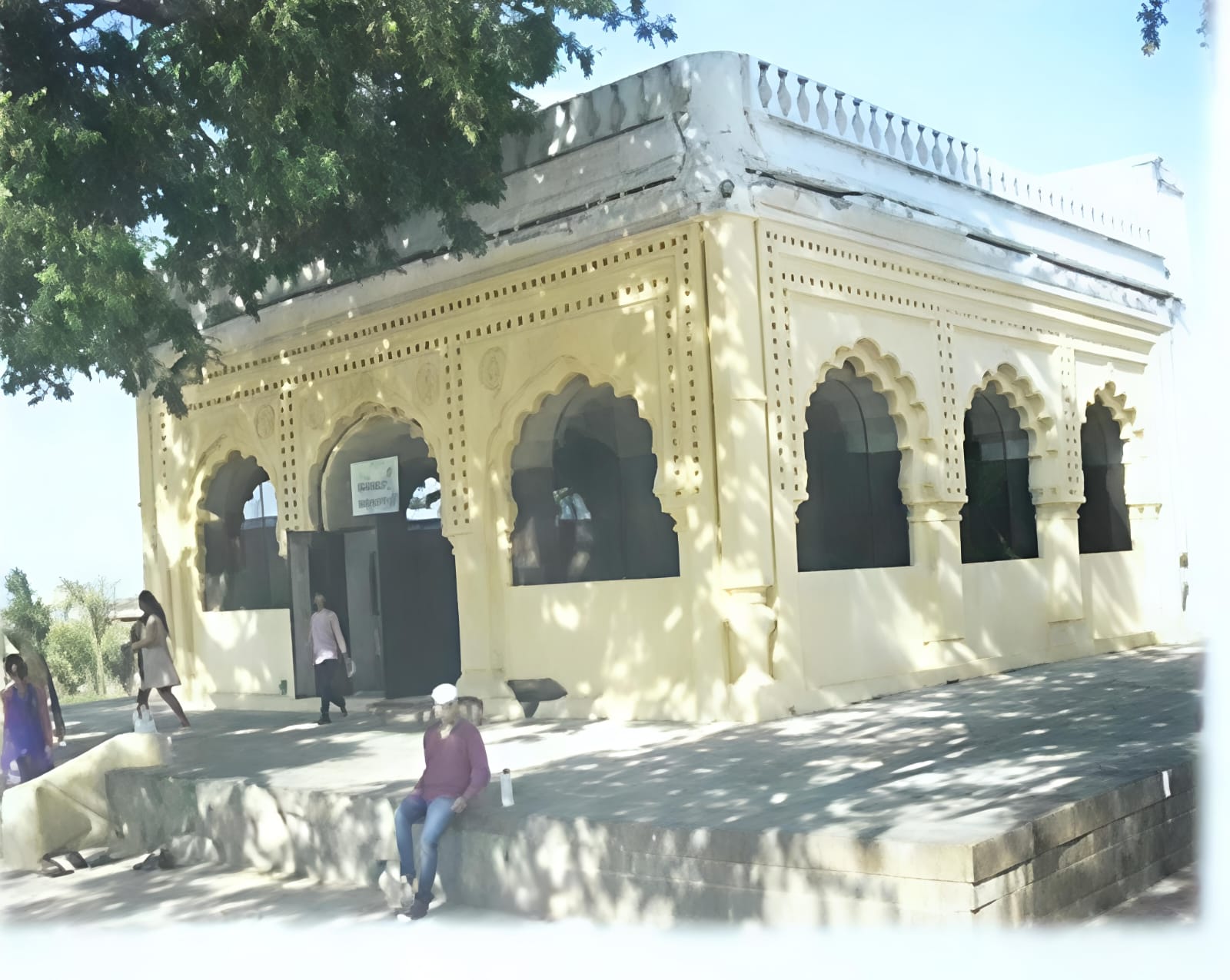
In 1681 AD, Alamgir Aurangzeb, who had set out on a southern campaign, could not return to Delhi. On 21 February 1707, the emperor passed away at the age of 89 in Nagar. The emperor was in Nagar for exactly 1 year and 1 month. The place where Aurangzeb breathed his last is known as ‘Alamgir’. This place, located on the Nagar-Pathardi road, a little further from Bhingar, currently houses a mosque, a baradari and a madrasa. The museum in Baradari has a rare copy of the Quran in golden letters. A tomb has been built where Aurangzeb’s body was bathed. The burial was done in Khultabad.
(Distance from bus stand 6 km)
Dogargan
If you want to spend a day in such an environment, with flowing streams, birds roaming freely, royal vines clinging to the tall trees... Dongargan is the best place for that. Dongargan, located next to Pimpalgaon Lake on the road leading from the city to Vambori, is an ancient religious place. The Rameshwar temple here, restored by the Shende family of Wai, the cave known as 'Sita's Vani', the Mardanswana on the nearby Manjarsubhya mountain and the elephant herd are must-sees for tourists. One can enjoy a forest feast here sitting in the dark shade of the trees. The mention of Chakradharaswami visiting here is found in 'Leelacharitra'.
(Distance from bus stand 18 km)
Meherabad
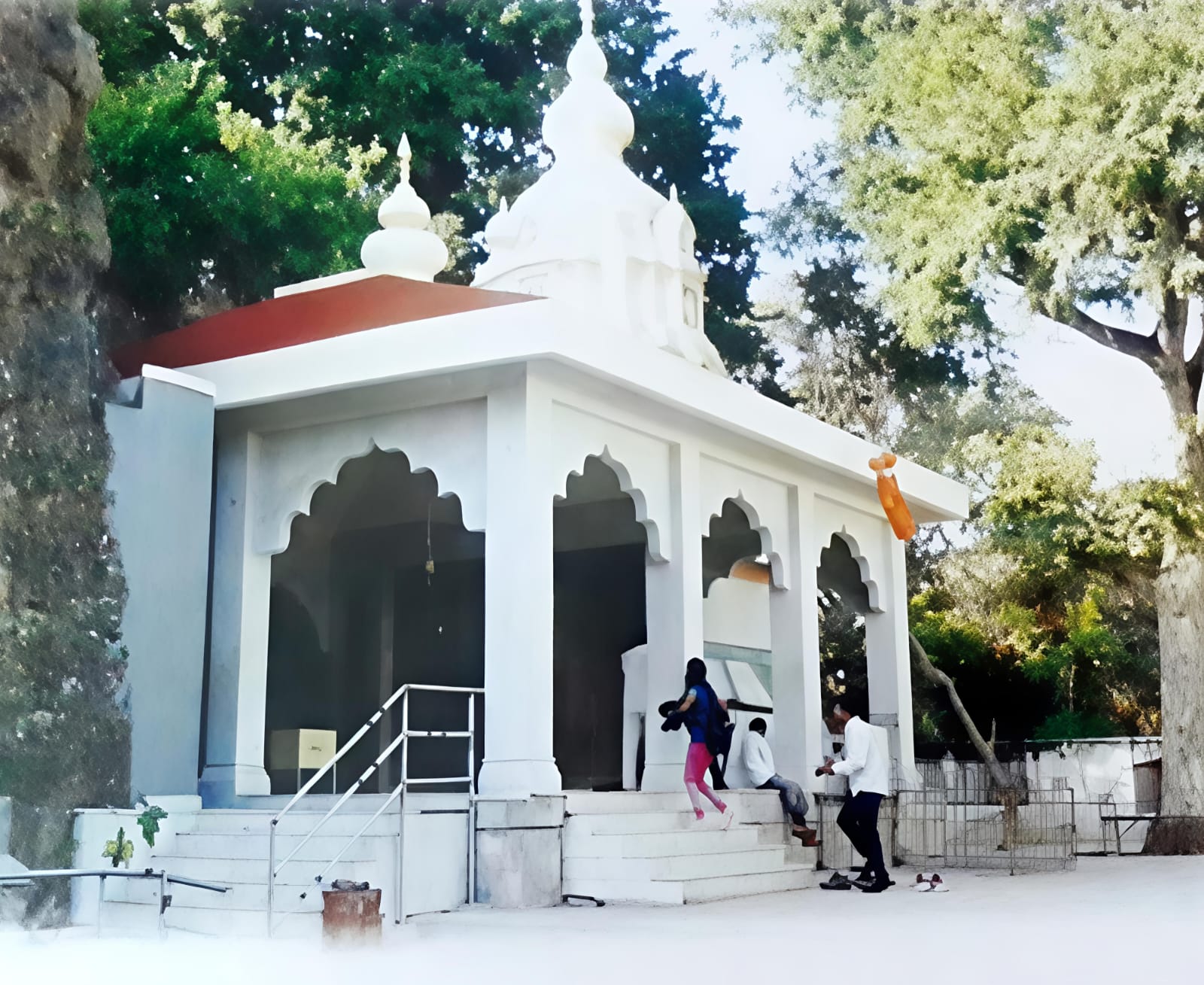
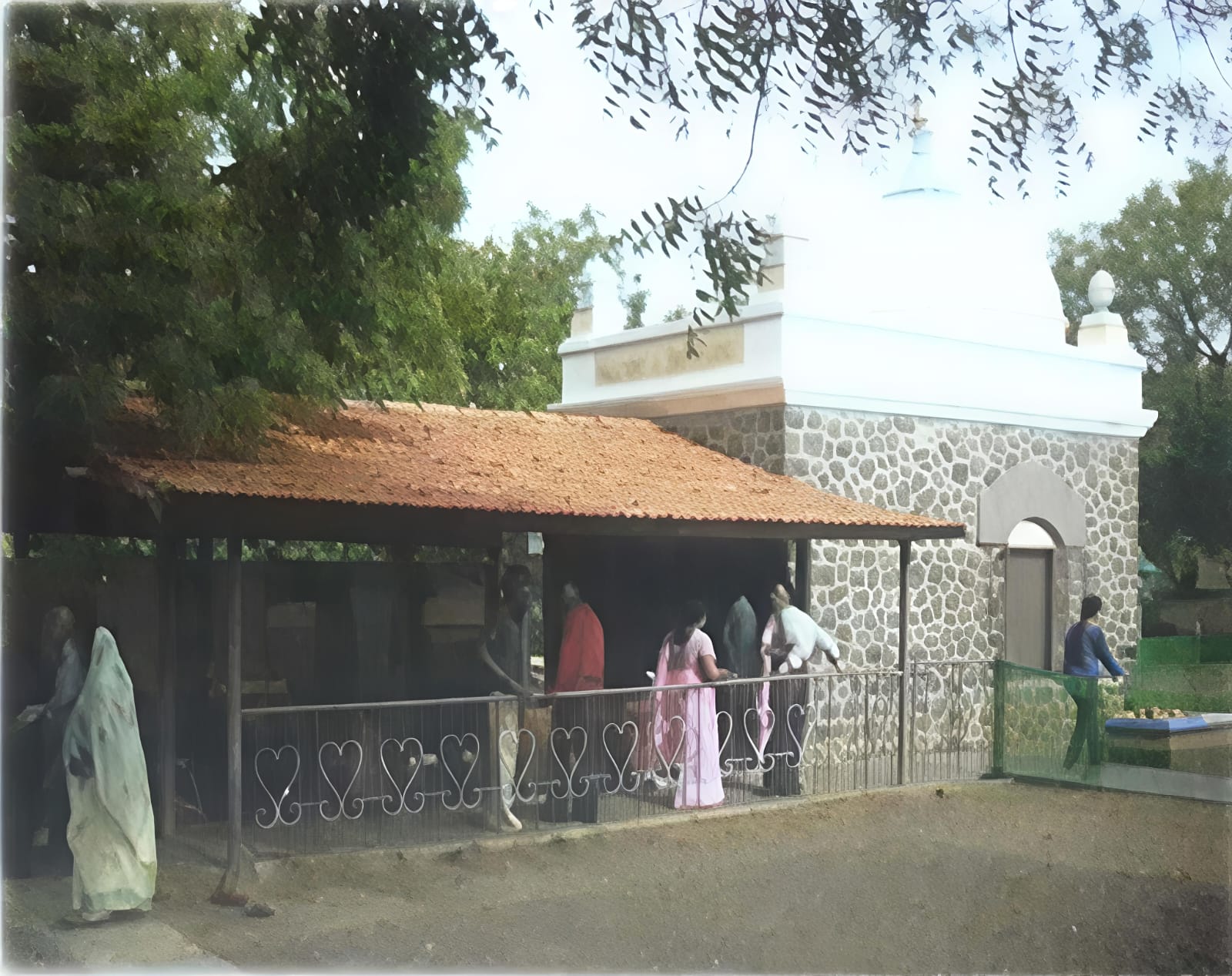
Meherabad, the tomb of Avatar Meher Baba, is located near Aranbhav on the Nagar-Daud road. Meher Baba started an ashram here in 1923. A few years later, a school for children and a free clinic for lepers were started. From July 10, 1925, Baba observed a state of silence. This state of silence lasted until the Mahasamadhi. Meher Baba passed away on January 31, 1969. Baba's cottage and museum are located near the tomb. His belongings, alphabet boards, clothes, photographs, and bicycles can be seen in the museum. Meher Baba's birth anniversary (February 25) and death anniversary (January 31) are celebrated on a large scale. The hill at Meheshzad near Pimpalgaon Malvi is considered especially sacred.
(Distance from bus stand 6 km)
Hume Memorial Church
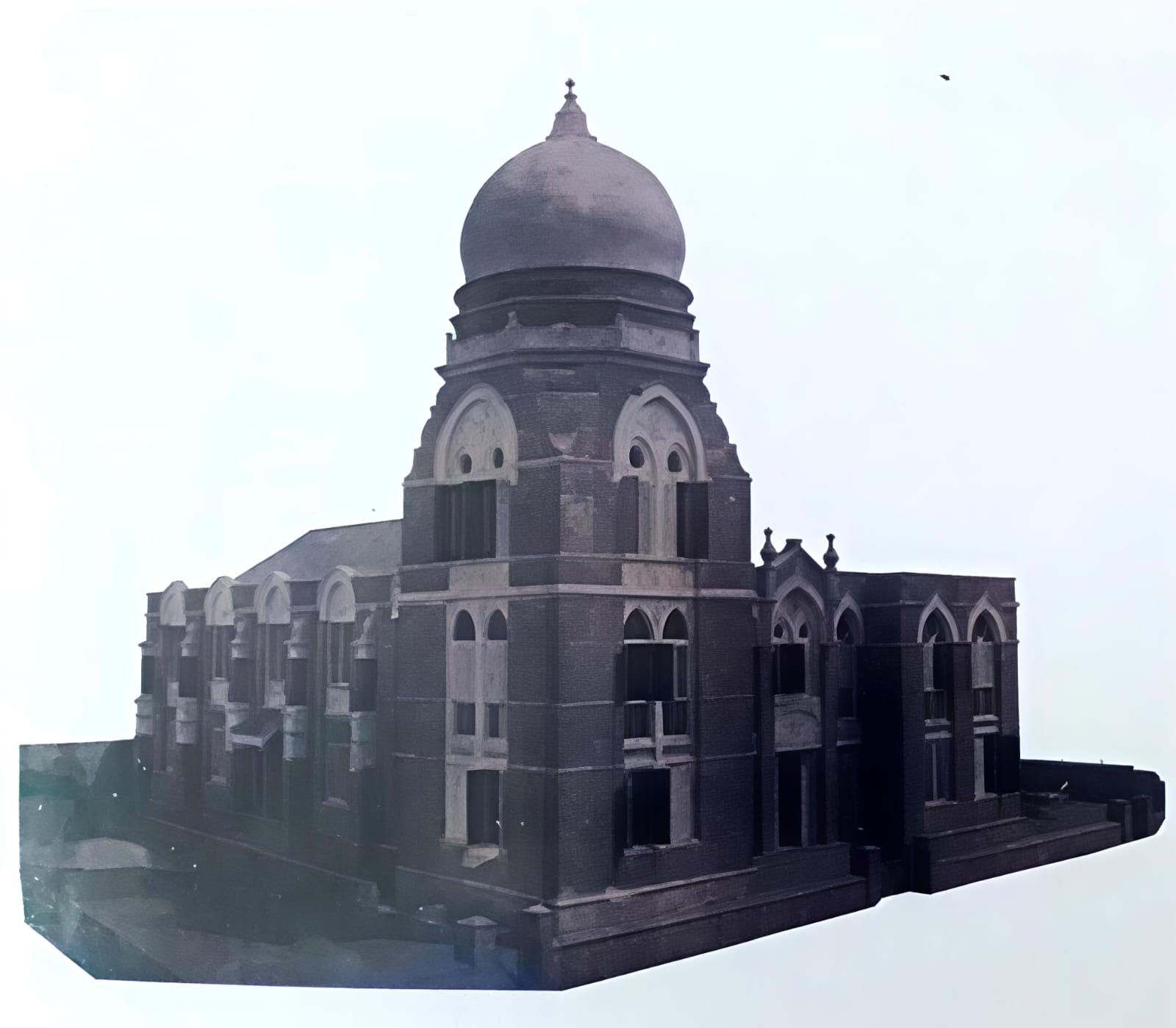
Various religions have played a significant role in the 500-year history of Ahmednagar city. The city is known as the ‘Jerusalem of Maharashtra’. In 1831, the Marathi Mission started its work in the city. Dr. Graham, John Wilson of the Scottish Mission, Stevenson, Mitchell, Greaves were the first missionaries to come to Magar. There are two prayer temples of the Ahmednagar First Congregational Church (Codi) in the city. The old temple was built in 1837. The Dhoom Memorial Church in Vistagalli was built between 1902 and 1906. This building is domed and has a dome instead of a tower on the top. There is a large brass bell next to the dome. The grandeur and lotus flowers drawn here and there are the features of this building. This church can seat 1300 devotees.
(Distance from bus stand 2 km)
Anandham
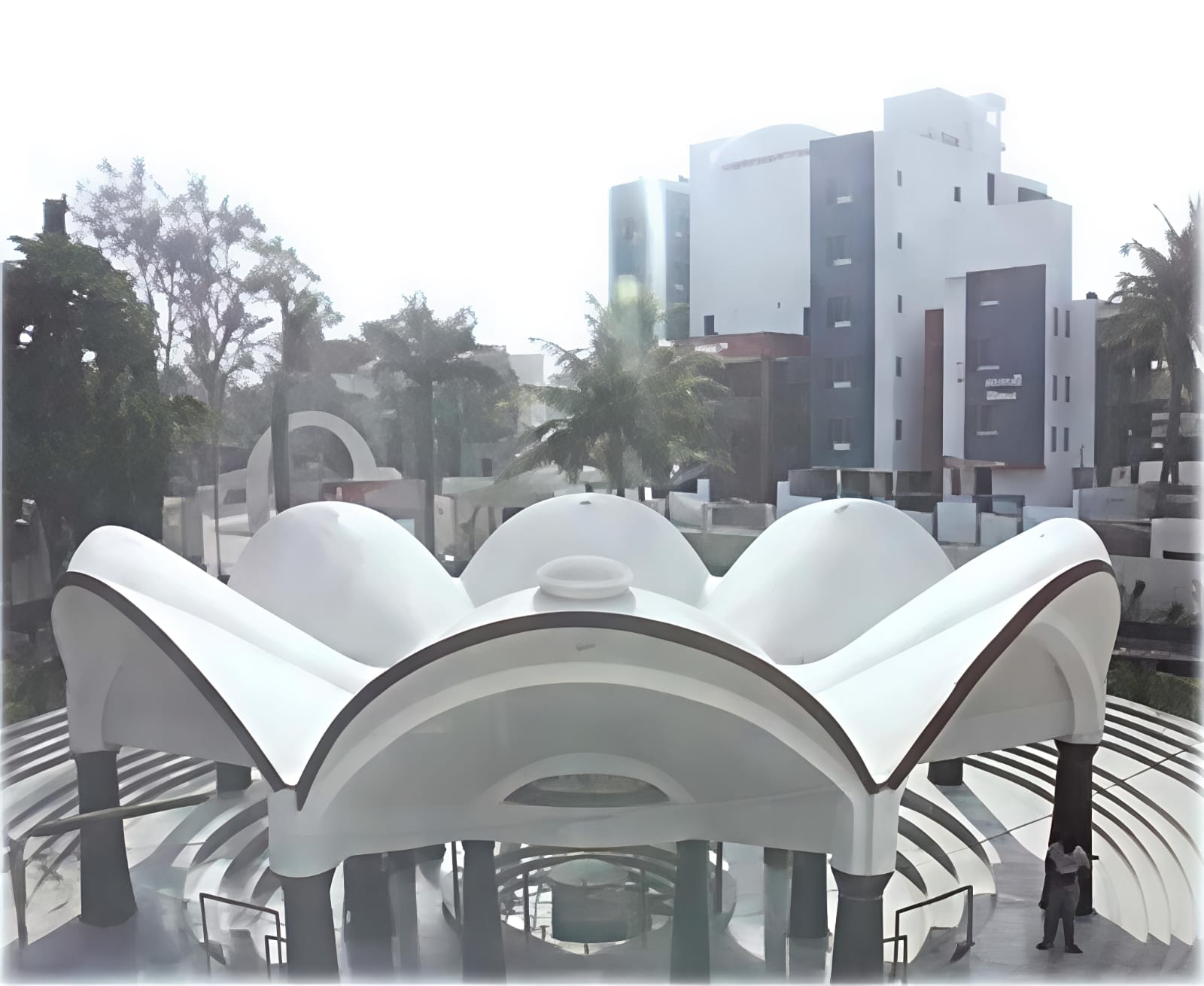
The residence of the national saint Jain Acharya Anand Rishiji Maharaj, who enriched the saintly tradition of Ahmednagar district, was the religious examination board. Born in Shiral Chichondi in Pathardi taluka, Anand Kapili took initiation into the Jain sect in Miri at the age of 13. On March 28, 1112, the Acharya passed away in his city, and the place where his last rites were performed, 'Anand Dham' stands on the spot. The ashes of Anand Rishiji are kept in the middle of this lotus-shaped structure. This has become a holy place for all religions. Behind this monument is the religious examination board and the Acharya's residence. The Anand Karshi seat and the items used by him are there. The library of the religious examination board has many rare books. (Distance from the bus stand is 1 km)
Tank Museum
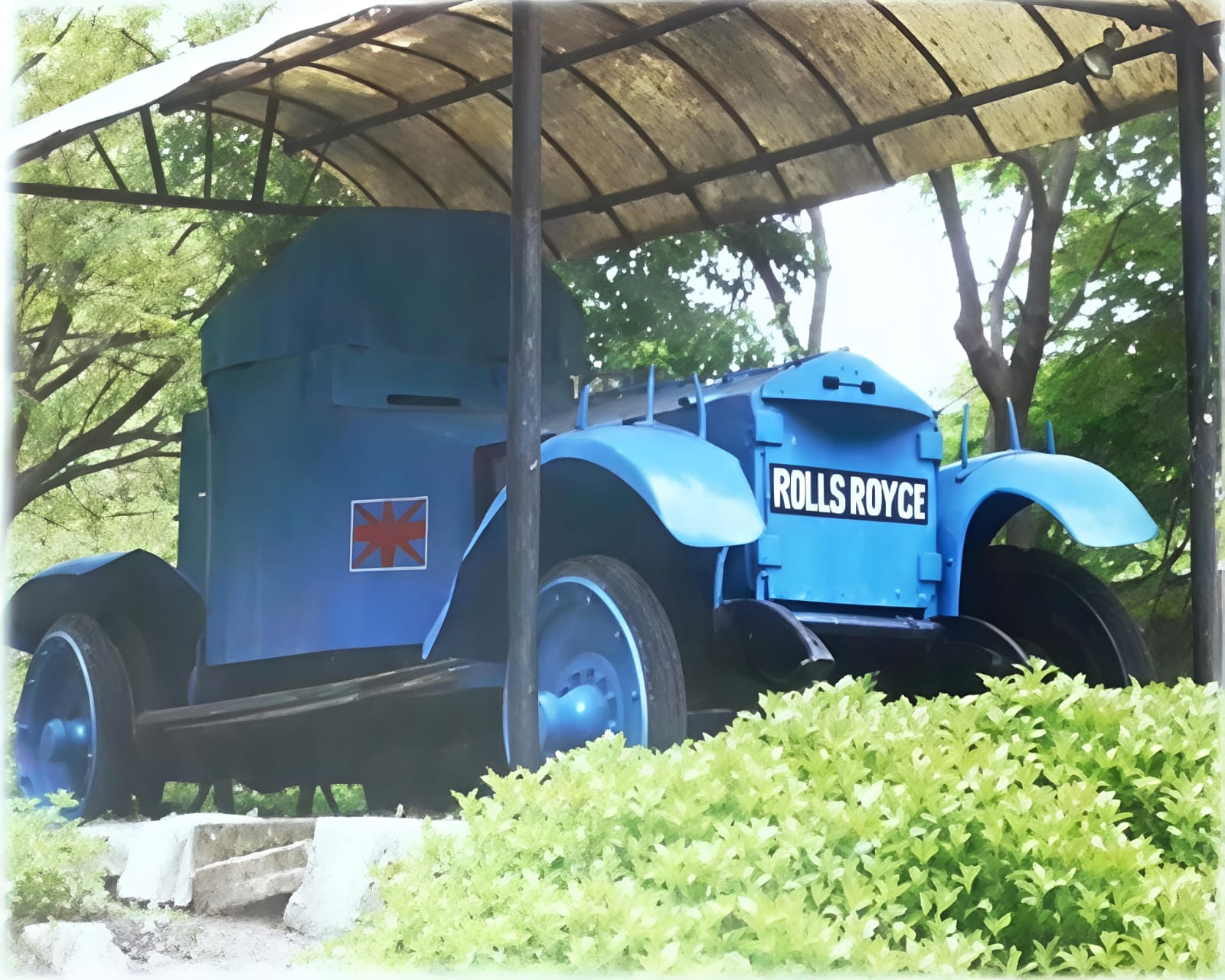
The Tank Museum, built by the Armored Corps Center and School near Farahbakhsh Mahal on the Ahmednagar-Solapur road, is a national treasure. This museum houses more than 40 tanks used in various wars by countries including India, England, America, Russia, Germany, Japan, France, etc. There are various types of tanks here, such as those that destroy mines buried in the ground, those that clear the way for the army by removing obstacles on the road, and those that float on water. There is a permanent exhibition of self-propelled tanks along with their replicas. Photographs and military flags are also on display in this museum. The ‘Penton’ tank, which was infamously used by the Indian Army in the Pakistan War, is also there.
(Distance from bus stand 4 km)
Efforts Planetarium
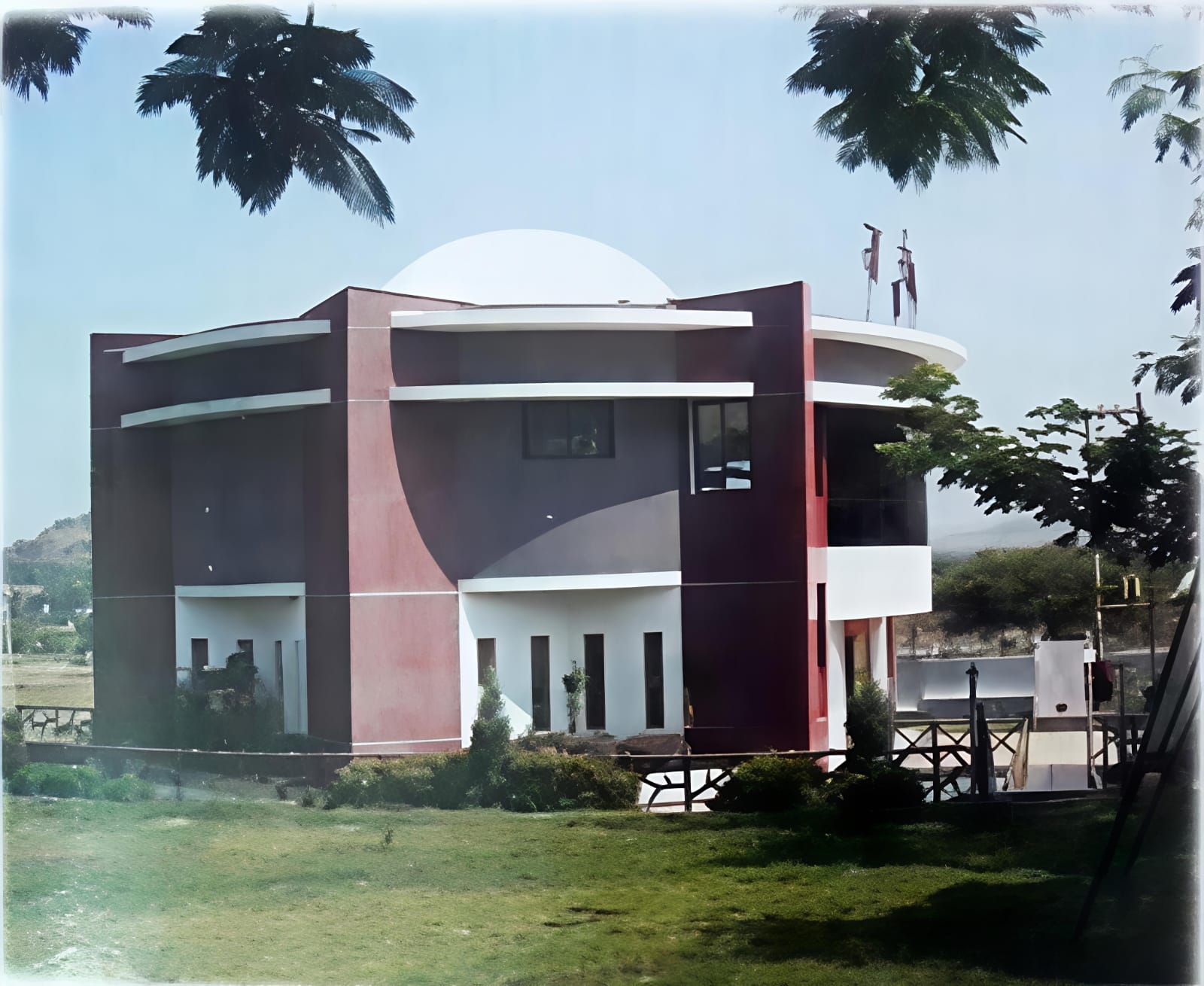
The world's first state-of-the-art digital planetarium in a rural area is 12 km from the city. It has been set up near Dhanmaswadi on Aurangabad Road. Planets, stars, constellations in the sky, as well as interesting and informative shows on various space missions in Marathi, Hindi and English are shown here. You can visit this planetarium any day of the week. A star garden and a science-based park with a fountain have also been set up in this area. Food and accommodation arrangements have been made here for trips. Night sky viewing is organized. Contact: Mr. Ashok Jogde, Md. 9822095691. Phone – (0241) 2424103.
Something else to see in the city area...
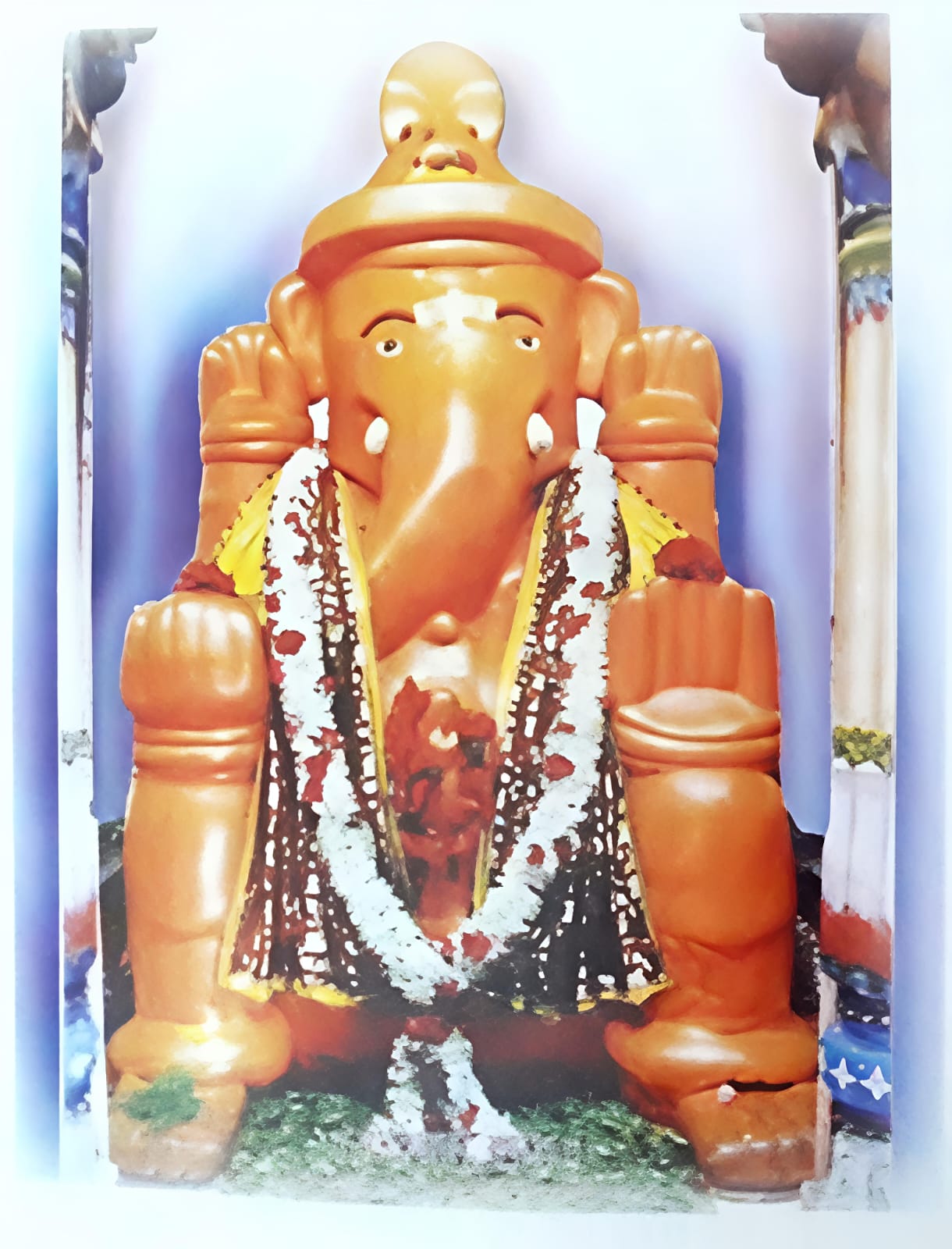
* The huge Ganpati temple in Maliwada, Shahsharif Dharma, Renuka Mata of Kedgaon * Burhannamswi Devi, 'Saare Jahan Se Accha' pencil painting from Mahavir Art Gallery, Bara Imam Kotla * Do Boti Chira, Jain temple in Kapad Bazaar, Gorakshnath Fort, by the art gallery of painter Pramod Kamble and painter Anuradha Thakur * Akolner, Amadgaon.
Important places in Nagar district:
Dnyaneshwar Temple of Newasha Rural Rehekuri Sanctuary at Jamkhed * Sai Baba's Ladder Siddhivinayakave Siddhatek Shanishinganapur Devgad Mohta Devi Vriddheshwar Ralegan Siddhi Health Project * Sahuri Yeshil Mahatma Phule Agricultural University Bhandardara Dam Kalsubai Harishchandra Gad Ratangad Punyashloka Ahilyabai Holkar's birthplace Chaundi Nighoj's Ranjankhalge * Dhokeshwar Lene * Bhagavangad Pedgaon and the fort of heaven.
Historical Museum
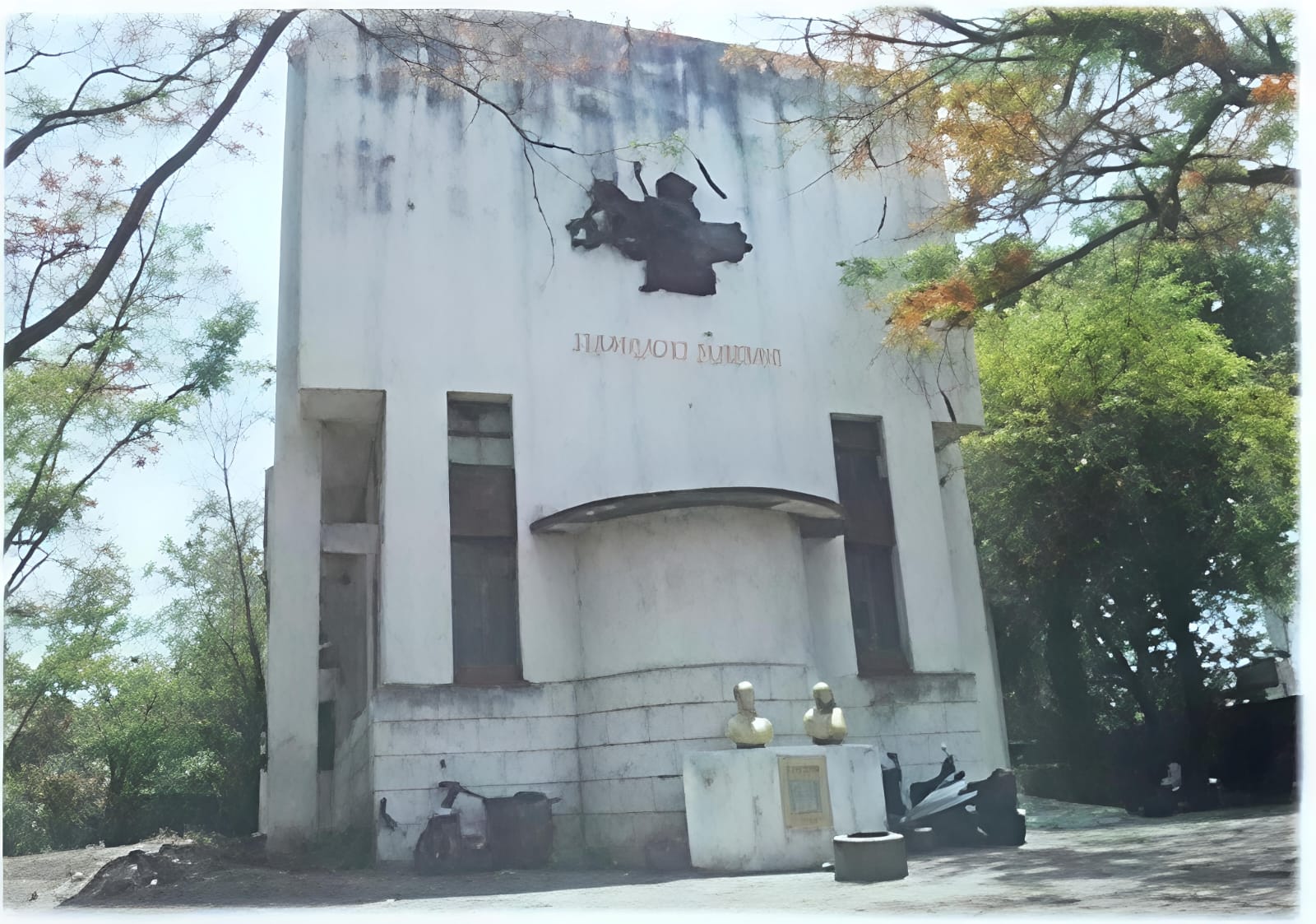
The museum (established on May 1, 1960) that preserves the historical heritage of Ahmednagar district is famous in Maharashtra. This imposing structure, standing near the District Collector's Office, has a collection of more than 50,000 rare documents, 15,000 books, pamphlets, copper plates, weapons, over a thousand old coins, idols, etc. The museum houses objects from excavations in Jorve, Nevase and Dayamabad; the oldest copy of the ancient Marathi text Jyotishratnamala, a 200-foot-long birth certificate; a stone press, a ring with the image of 'Ram Panchayat' engraved on a mustard-sized bead, miniatures; a bicycle without a chain, a Ramakrishna poem that can be read in reverse, and various types of Ganesha. The museum is open every day except Thursday from 10 am to 5 pm.
(Distance from bus stand 2 km)
How to get to the city...
Ahmednagar is 120 km from Pune, 110 km from Aurangabad, 284 km from Mumbai and 85 km from Shirdi. There is excellent bus and rail facilities here. The nearest airports are Pune and Aurangabad. Soon an airport is coming up at Kakdi near Shirdi.
The city can be visited any time of the year. However, August to February is the best time for tourists. The city is famous for its cloth market, pottery market and saraf market. You will definitely like the city's misal, jalebi, swava and chivda.
 अहिल्यानगर ऐतिहासिक स्थळे